

Table of Contents
- Dermatitis vs. Dry Skin: What's the Real Difference?
- Dry Skin: A Barrier Problem
- Dermatitis: An Immune Response
- How to Tell Dermatitis and Dry Skin Apart
- Natural Remedies for Dry Skin That Support the Skin Barrier
- Dermatitis Treatment: Managing Flare-Ups and Inflammation
- When to See a Doctor for a Skin Rash
- Pediatric vs. Adult Dermatitis: What Changes With Age
- Frequently Asked Questions
Last Updated: September 20, 2026
Dermatitis vs. Dry Skin: What's the Real Difference?
Dermatitis and dry skin often look the same in the mirror, but they are not the same problem. The difference in dermatitis vs dry skin comes down to cause: dry skin is a barrier problem, while dermatitis is an immune response. One you can often fix with the right moisturizer.
Dry Skin: A Barrier Problem
Dry skin is a condition where the outer layer of skin loses water faster than it can hold onto it. The result is rough, tight, flaky skin that feels uncomfortable but usually isn't inflamed.
Signs of plain dry skin include:
- Rough or flaky patches
- A tight feeling after washing
- Fine lines that look worse in winter
- No redness or swelling
Dermatitis: An Immune Response
Dermatitis is inflammation of the skin caused by an immune reaction. Your body's defense system overreacts to something, and the skin becomes red, swollen, and intensely itchy.
How to Tell Dermatitis and Dry Skin Apart
With dermatitis vs dry skin, you can usually tell them apart by color, pattern, and itch level. Dry skin is dull and flaky; dermatitis is red, inflamed, and often appears in specific patterns.
Here's a quick comparison:
Feature |
Dry Skin |
Dermatitis |
|---|---|---|
Color |
Normal or ashy |
Red, inflamed |
Texture |
Rough, flaky |
Scaly, cracked, oozing |
Itch level |
Mild |
Intense, often worse at night |
Pattern |
Widespread |
Patchy, often in creases |
Response to moisturizer |
Improves fast |
May not help alone |
Visual Differences: Redness, Scaling, and Rash Patterns
Dry skin rarely turns red, it looks dull, ashy, or white and flaky. Dermatitis brings visible redness and a patchy rash that can weep or crust.
Itchiness and Pruritus: When It's More Than Dryness
Mild itchiness is normal with dry skin. Pruritus, the medical term for severe itch, is a hallmark of dermatitis, intense enough to disrupt sleep and lead to scratching that breaks the skin.
Natural Remedies for Dry Skin That Support the Skin Barrier
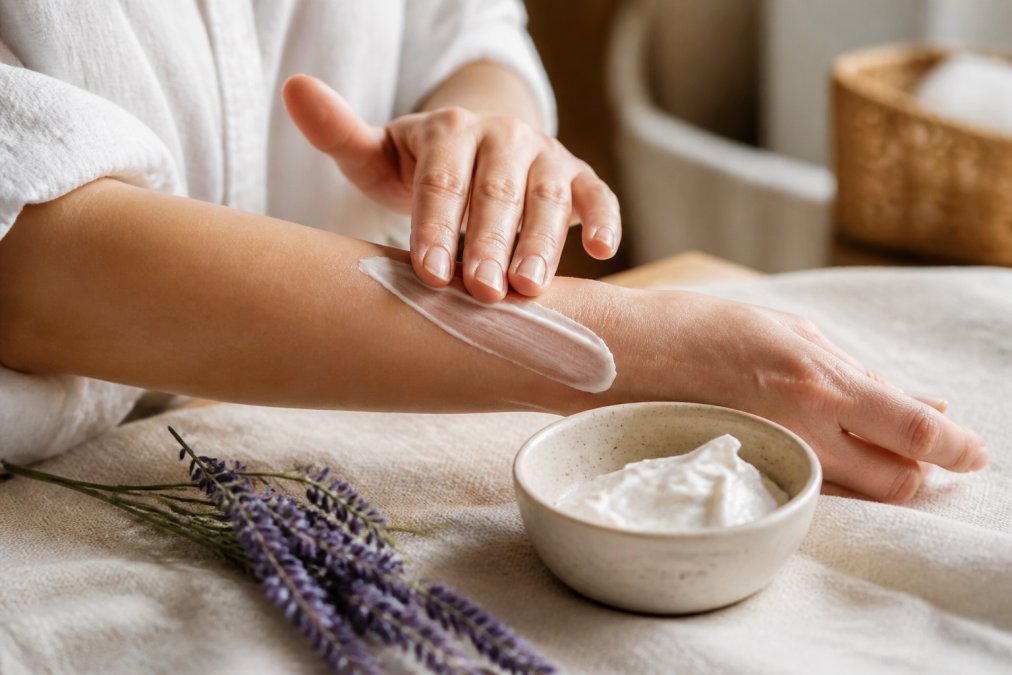
The best natural remedies for dry skin rebuild the skin barrier, not just add surface moisture. A healthy barrier works like a brick-and-mortar wall: skin cells are the bricks, and a matrix of lipids, ceramides, cholesterol, and free fatty acids, is the mortar that holds them together and keeps water from escaping.
Emollients, Humectants, and Occlusives: What Each One Actually Does
Three ingredient classes do the heavy lifting, and the best moisturizers combine all three:
- Humectants pull water into the upper skin layers. Glycerin is the most common and best studied; others include hyaluronic acid, panthenol, and urea. Urea at roughly 5-10% softens rough patches, and at higher concentrations it exfoliates (pubmed.ncbi.nlm.nih.gov). On cracked skin it can sting, so patch-test first.
- Emollients fill the gaps between skin cells so the surface feels smooth. Shea butter, squalane, jojoba, and fatty alcohols like cetyl and stearyl alcohol fall here. Fatty alcohols soften skin; simple alcohols like ethanol and isopropyl alcohol are drying and should be avoided on a compromised barrier.
- Occlusives sit on top and block water loss. Petrolatum is the gold standard, it reduces transepidermal water loss by a very large margin and has one of the lowest allergy rates of any skin ingredient. Beeswax, lanolin, and dimethicone are common alternatives, though lanolin is a known allergen for a small share of people.
Ingredient Guide: What to Look For and What to Avoid
Ceramides are the dominant lipid in the skin barrier, and creams built around ceramides plus cholesterol plus fatty acids in roughly physiologic ratios tend to outperform plain lotions for chronic dryness. Colloidal oatmeal is another evidence-backed option, its avenanthramides calm itch and redness, and it holds a formal skin-protectant designation.
Ingredients to avoid if your skin reacts easily:
- Fragrance, including "natural" fragrance oils, essential oils, and botanical extracts. Fragrance mix is one of the most common causes of allergic contact dermatitis.
- Drying alcohols, ethanol, denatured alcohol, isopropyl alcohol.
- Preservatives with high sensitization rates, methylisothiazolinone and methylchloroisothiazolinone, often listed together.
- Physical exfoliants and strong acids, scrubs, high-percentage glycolic or salicylic acid on already-irritated skin.
Application Timing and Technique
How you apply matters as much as what you apply:
- Apply within three minutes of a shower, while skin is still damp, to trap water before it evaporates.
- Use lukewarm water, not hot, and keep showers under about 10 minutes with a gentle, fragrance-free cleanser.
- For very dry or cracked areas, layer a humectant, then an emollient, then an occlusive to seal it in.
- Reapply to hands after every wash, since handwashing is the biggest driver of hand dryness.
Climate and Seasonal Adjustments
Humidity changes what your skin needs. In dry winter air or heated indoor spaces, switch to a thicker ointment or cream and consider a humidifier. In humid summer months, a lighter lotion may be enough, since heavy occlusives can trap sweat and trigger itch. In a low-humidity climate year-round, an occlusive layer is the base of your routine.
When Natural Remedies Aren't Enough
If consistent barrier care for two to four weeks doesn't improve rough, flaky skin, the problem may not be simple dryness. Redness, intense itch, or a returning rash points toward dermatitis, which needs a different approach, natural remedies support the barrier but don't calm an immune reaction.
Dermatitis Treatment: Managing Flare-Ups and Inflammation
Dermatitis treatment aims to calm inflammation and prevent flare-ups. Moisturizing alone won't stop an immune reaction, so doctors often add medication.
Topical Corticosteroids and Prescription Options
Topical corticosteroids are the most common first-line treatment, reducing redness and itching by calming the immune response. Strength varies from over-the-counter hydrocortisone to prescription formulas.
Other options include:
- Non-steroid creams like tacrolimus
- Oral medications for severe cases
- Biologics for chronic atopic dermatitis
When to See a Doctor for a Skin Rash
See a doctor for a skin rash when it spreads quickly, oozes, or doesn't improve after a week of home care. You should also get checked if the itching disrupts sleep or the rash comes with fever.
Red Flags That Need Prompt Attention
Some signs mean you shouldn't wait for a routine appointment:
- The rash is painful, hot to the touch, or spreading rapidly
- You have fever, chills, or feeling generally unwell alongside the rash
- Blisters, open sores, or signs of infection like pus or yellow crusting
- The rash involves the eyes, mouth, or genitals
- Swelling of the face, lips, or throat, this is a medical emergency
- A rash that appears suddenly after starting a new medication
Reasons to Book a Dermatology Appointment
For less urgent but persistent problems, these triggers justify a specialist visit:
- The rash keeps coming back after treatment
- Over-the-counter hydrocortisone and moisturizers aren't helping after one to two weeks
- You have a personal or family history of eczema, asthma, or seasonal allergies
- The itching disturbs sleep or causes scratching that breaks the skin
- You can't identify the trigger, and it appears in the same spot repeatedly
- The rash affects your work, sleep, or daily comfort
What a Diagnosis Actually Involves
A dermatologist usually starts with a clinical exam, the color, pattern, and location of the rash, plus your history, products, and environment. There's no single blood test that says "this is dermatitis"; diagnosis is pattern recognition plus history.
What to Bring to Your Appointment
A little preparation makes the visit more productive:
- Photos of the rash at its worst, especially if it's calmer on the day of your visit
- A list of every product that touches your skin, cleansers, moisturizers, laundry detergent, shampoo, makeup
- Notes on when flare-ups happen and what you were doing beforehand
- Any medications you take, including supplements
- How long the problem has lasted and what you've already tried
Primary Care vs. Dermatologist
A primary care doctor can handle many straightforward rashes, prescribe topical steroids, and refer you onward. A dermatologist is the better first stop when the rash is chronic, recurring, hard to identify, or hasn't responded to treatment. If patch testing is likely, go straight to dermatology, most primary care offices don't offer it.
Pediatric vs. Adult Dermatitis: What Changes With Age
Dermatitis looks different depending on age. In babies, atopic dermatitis often starts on the cheeks and scalp. In children, it moves to elbow and knee creases. By adulthood, it tends to settle on the hands, neck, and eyelids.
Frequently Asked Questions
What are the primary visual differences between dermatitis and dry skin?
Dry skin typically looks dull, feels rough, and may show fine flaking or cracking without much redness. Dermatitis, however, often presents with redness, swelling, and a patchy rash. The affected area may have scaling, crusting, or small bumps. While dry skin can appear anywhere, dermatitis frequently shows up in specific patterns, like the folds of the elbows or behind the knees. A dermatologist can make a clinical diagnosis by examining these visual cues and asking about your history.
What triggers dermatitis flare-ups compared to simple dry skin?
Simple dry skin is usually caused by environmental factors like low humidity, harsh soaps, or hot showers, which strip the lipid barrier. Dermatitis involves an immune response and is triggered by a mix of genetics, allergens, and irritants. Common triggers include fragrances, certain fabrics, stress, and temperature changes. For some, an allergic reaction to a specific substance, identified through patch testing, is the root cause. Avoiding those triggers is key to managing dermatitis.
Is it best to let dermatitis dry out or keep it moisturized?
Keep it moisturized. Letting dermatitis dry out can worsen the skin barrier, increase itchiness, and lead to cracking, which raises the risk of infection. Applying a hypoallergenic moisturizer or emollient immediately after bathing helps trap water in the epidermis and supports the lipid barrier. For active flare-ups, your dermatologist may recommend a topical corticosteroid alongside moisturizer. Consistent skin hydration is a cornerstone of both dry skin and dermatitis care.
When should you see a doctor for skin irritation?
See a doctor if your skin is intensely itchy, painful, or shows signs of infection like yellow crusting, oozing, or warmth. If over-the-counter moisturizers and gentle skincare don't improve your skin within two weeks, or if the rash spreads quickly, seek medical advice. A dermatologist can perform a clinical diagnosis, rule out other chronic conditions, and recommend prescription treatments. Early intervention can prevent the itch-scratch cycle from worsening.
0 comments