

Table of Contents
- Essential Oils vs Fragrance Oils for Skin: Key Differences
- How to Dilute Essential Oils for Skin Safely
- Fragrance Oil Skin Irritation Symptoms to Watch For
- Frequently Asked Questions
Last Updated: September 23, 2026
Essential Oils vs Fragrance Oils for Skin: Key Differences
The essential oils vs fragrance oils for skin debate comes down to what is in the bottle. Essential oils are concentrated plant extracts made through distillation or cold-pressing, so their composition shifts with the harvest. Fragrance oils are lab-built blends of aroma chemicals, consistent, but harder to trace.
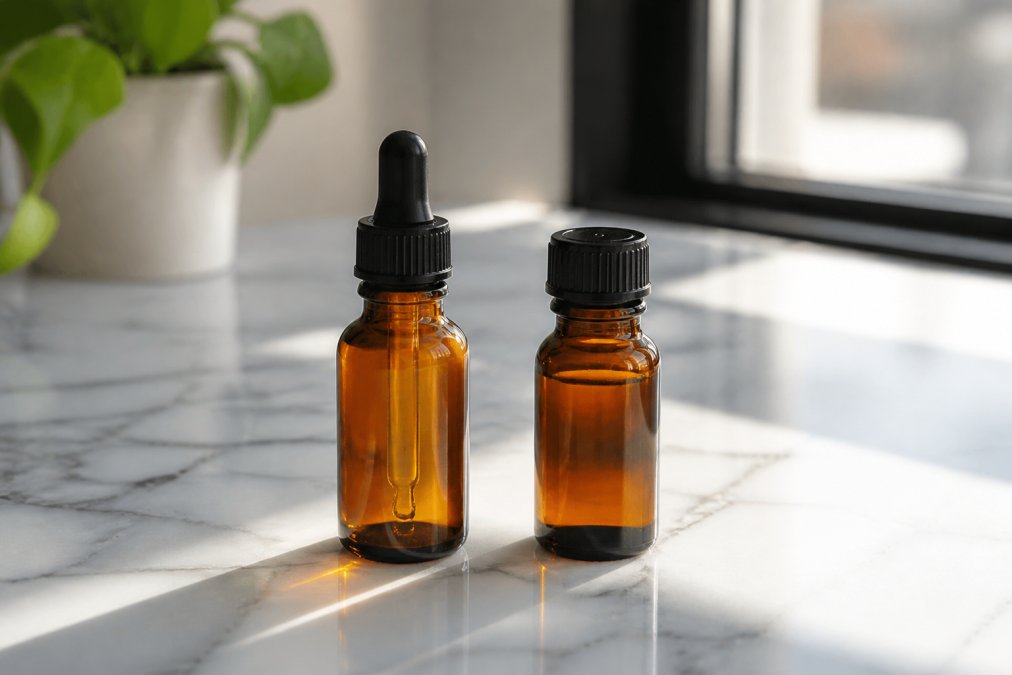
That difference matters most for reactive skin: plant-derived does not automatically mean safer, and synthetic does not automatically mean irritating. The FDA guidance on cosmetic labeling treats "natural" as a marketing word with no legal definition.
Factor |
Essential Oils |
Fragrance Oils |
|---|---|---|
Source |
Plant-derived, distilled or cold-pressed |
Synthetic compounds, lab-blended |
Consistency |
Varies by batch and harvest |
Identical every batch |
Labeling |
Often listed by plant name |
Frequently listed only as "fragrance" |
Neither column wins outright, it depends on your skin barrier, dilution habits, and desired label transparency.
How to Dilute Essential Oils for Skin Safely
Dilution is the step most people skip, and it causes the most reactions. Essential oils are far too concentrated for direct topical application, so mix them into a carrier oil such as jojoba, sweet almond, or coconut oil.
A common starting point is 1% for facial use and 2% for body use, roughly six drops per ounce at 1%. Sensitive skin should start lower.
- Patch test on the inner forearm for 24 hours
- Avoid phototoxic oils like bergamot and citrus before sun exposure
- Store blends away from light to slow oxidation
Fragrance-free formulas sidestep this calculation. Simply Castile is built from a single ingredient, 100% Organic Unrefined Coconut Oil, with no added scent.

Fragrance Oil Skin Irritation Symptoms to Watch For
Fragrance oil skin irritation symptoms usually show up fast: redness, itching, burning or stinging, small bumps, or dry flaking patches. They can appear within minutes or build over days of repeated use.
Contact dermatitis is the most common outcome, and it can develop even to a product you have used for months. Once skin is sensitized, the American Academy of Dermatology guidance on contact dermatitis notes that even tiny amounts of the same ingredient can trigger a flare. If a reaction appears, stop using the product, rinse with cool water, and let the skin settle; persistent irritation needs a dermatologist.
For skin that reacts easily, unscented staples are the safer default. Simply Skin Balm uses Unrefined Cocoa Butter, Organic Beeswax, and Organic Vitamin E Oil, with nothing added for scent.

Frequently Asked Questions
Is it better to use fragrance oil or essential oil for skin care?
It depends on your sensitivity. Essential oils are plant-derived and may offer therapeutic benefits, but they contain natural allergens and require dilution. Fragrance oils are synthetic and more likely to trigger irritation in sensitive skin. For reactive or eczema-prone skin, a fragrance-free product like Simply Castile is the safest choice. Always patch test before applying any scented product to larger areas.
What are the symptoms of fragrance oil skin irritation?
Fragrance oil skin irritation symptoms include redness, itching, burning, stinging, or a rash that appears within minutes to hours of application. Contact dermatitis may develop over repeated exposure. If you notice any of these signs, wash the area with mild soap and water, stop using the product, and consult a dermatologist if symptoms persist. Patch testing on your inner forearm for 24 hours can help identify sensitivities before full use.
How do I dilute essential oils for skin application?
Dilute essential oils in a carrier oil such as coconut, jojoba, or sweet almond oil. For adults, a safe starting dilution is 1-2% (about 6-12 drops per ounce of carrier oil). For sensitive skin or facial use, start at 0.5-1%. Never apply undiluted essential oils directly to skin. If you are pregnant, nursing, or have a skin condition, consult a healthcare provider before using essential oils.
Fragrance is the hardest variable to control when your skin is reactive. Simply Simple Soaps builds around simple, intentional ingredients instead, with handcrafted soaps and balms made to order and custom scent requests available when you do want one. Get started with Simply Simple Soaps and find a routine your skin can actually tolerate.
0 comments