

Table of Contents
- What Rosehip Oil Does for Acne Scars (and What It Cannot Do)
- The Science: How Rosehip Oil Supports Skin Repair
- How to Use Rosehip Oil for Acne Scars: A Step-by-Step Routine
- Does Rosehip Oil Clog Pores? Comedogenic Rating Explained
- Rosehip Oil vs Vitamin E for Scars: Which One Works Better?
- Cold-Pressed vs. Refined Rosehip Oil: Quality Matters
- How Long Until You See Results? Realistic Expectations
- Frequently Asked Questions
Last Updated: September 21, 2026
What Rosehip Oil Does for Acne Scars (and What It Cannot Do)
Rosehip oil is a cold-pressed carrier oil rich in linoleic acid, vitamin A precursors, and antioxidants that supports skin cell regeneration and helps fade post-inflammatory hyperpigmentation. It works on flat acne marks and discoloration, but cannot rebuild deep pitted scar tissue.
This guide explains which scar types respond to topical application and which need a dermatologist.
Acne Marks vs. Deep Pitted Scars: Why the Difference Matters
Acne marks sit in the epidermis: flat red, brown, or purple discoloration after a breakout heals, fading as cell turnover does its job. Deep pitted scars are structural, formed when inflammation destroys collagen in the dermal layer and leaves a depression the skin cannot rebuild.
- Post-inflammatory hyperpigmentation (PIH): flat brown or red marks, responsive to rosehip oil
- Post-inflammatory erythema (PIE): flat red or pink marks, partially responsive
- Atrophic scars: ice-pick, boxcar, and rolling scars, not responsive to topical oils
- Hypertrophic scars: raised scar tissue, generally require clinical treatment
The Science: How Rosehip Oil Supports Skin Repair
Rosehip oil supports skin repair through three mechanisms: fatty acids that feed the skin barrier, vitamin A compounds that encourage cell turnover, and antioxidants that reduce oxidative stress from inflammation. Evidence is strongest for hydration and barrier support, moderate for fading discoloration, and essentially absent for rebuilding structural scar tissue.
Key Nutrients: Vitamin A, Fatty Acids, and Antioxidants
The oil's vitamin A arrives mostly as trans-retinoic acid precursors, a gentler relative of prescription retinoids. That is why rosehip oil rarely causes tretinoin's peeling and irritation, and why it works more slowly: the concentration is low, so the effect is cumulative rather than dramatic.
PIH vs. PIE: Which Mark Does Rosehip Oil Actually Treat?
Most articles lump every flat mark under "acne scars," the single biggest source of disappointment with rosehip oil, because the two flat mark types respond differently.
- Post-inflammatory hyperpigmentation (PIH): brown, tan, or dark marks left after inflammation. These are melanin deposits, best treated with ingredients that interrupt pigment production and speed cell turnover; rosehip oil's vitamin A precursors and antioxidants support this, though results are gradual.
- Post-inflammatory erythema (PIE): red, pink, or purple marks caused by dilated capillaries and lingering inflammation rather than melanin. Pigment-fading ingredients do less for them; rosehip oil's anti-inflammatory, barrier-supporting fatty acids can calm the redness, but indirectly and slowly.
What the Evidence Actually Supports
Clinical research on rosehip oil specifically for acne scarring is limited. Most studies examine it for general hydration, barrier function, and post-procedure healing rather than scar fading in isolation. The strongest claims come from its known nutrient profile and how those nutrients behave in skin, not from large trials on acne scars.
How to Use Rosehip Oil for Acne Scars: A Step-by-Step Routine
The most effective routine is three to four drops of rosehip oil at night after cleansing, before heavier moisturizers, on clean, slightly damp skin. Consistency over months matters more than quantity per application, and what you pair it with matters as much as how you apply it.
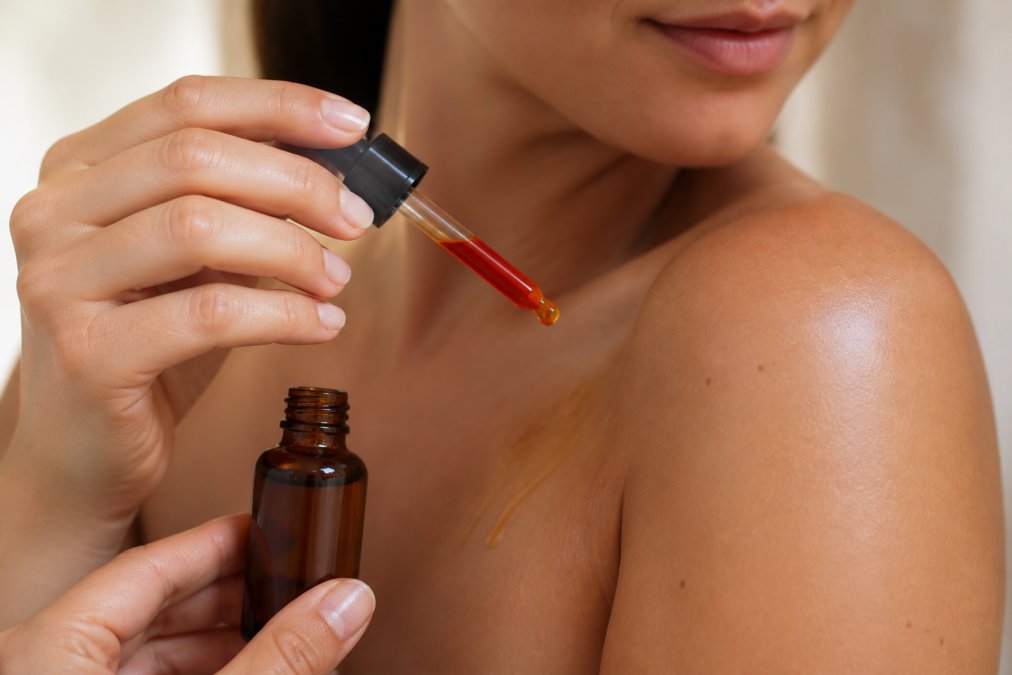
Here is the sequence that works:
- Cleanse with a gentle, non-stripping bar. Simply Simple Soaps' RoseAloe Salt Bar uses organic aloe vera and rose petal powders to calm redness while organic pink Himalayan salt handles light exfoliation.
- Pat skin dry, leaving it slightly damp.
- Warm three to four drops of rosehip oil between your palms.
- Press, do not rub, into the affected areas and the rest of the face.
- Follow with a moisturizer or balm to seal hydration. A barrier balm like Simply Skin Balm works well here because unrefined cocoa butter and organic beeswax lock in the oil without adding synthetic fragrance.
- Use sunscreen every morning. Vitamin A compounds increase photosensitivity, and UV exposure undoes the fading you are working toward.
What to Pair With Rosehip Oil (and What to Avoid)
This is where routines succeed or fail. Rosehip oil is a carrier oil, not an active, so it plays well with most ingredients when layered correctly, but a few combinations undercut results or irritate skin.


Good pairings:
- Vitamin C (morning): A pigment-focused antioxidant that works on PIH. Use it in the morning under sunscreen and keep rosehip oil for the evening; together they cover pigment fading and barrier support without competing for the same step.
- Niacinamide: A well-tolerated active for both PIH and oil regulation. It layers cleanly under rosehip oil and is a good choice if your skin is too reactive for stronger acids.
- Retinol or prescription retinoids (alternate nights): Both push cell turnover, so the same night can over-exfoliate. A common pattern is retinoid one night, rosehip oil the next, giving you the stronger active without stacking irritation.
- Azelaic acid: Useful for both PIH and the redness of PIE, and it layers well under a carrier oil for most people.
Pairings to avoid or separate:
- Strong acids (glycolic, salicylic, lactic) in the same step: Acids lower surface pH, and oil applied immediately after can feel occlusive on freshly exfoliated skin. Alternate nights.
- Benzoyl peroxide in the same layer: It is drying and can make the oil feel heavy or pill. Use it as a spot treatment and keep the oil on the rest of the face.
- Other heavy oils stacked on top: Layering carrier oils does not multiply benefits; it increases congestion risk on acne-prone skin. One oil is enough.
Patch Testing and Layering Order
A patch test is non-negotiable for reactive skin. Apply one drop to the inner forearm, wait 24 hours, and check for redness, itching, or bumps. Repeat on the jawline for two nights before going full-face.
Does Rosehip Oil Clog Pores? Comedogenic Rating Explained
Rosehip oil carries a comedogenic rating of 1 on the standard 0-5 scale, so it is unlikely to clog pores for most people. The rating is low because the oil is high in linoleic acid and low in oleic acid, making it lighter than coconut or wheat germ oil.
Rosehip Oil vs Vitamin E for Scars: Which One Works Better?
Rosehip oil is the stronger choice for acne marks because it combines vitamin E with vitamin A precursors and linoleic acid. Vitamin E alone is a decent antioxidant but does not support cell turnover the way vitamin A compounds do.
Cold-Pressed vs. Refined Rosehip Oil: Quality Matters
Cold-pressed rosehip oil retains more of its vitamin A, vitamin C, and fatty acid content than refined versions. Heat and chemical processing degrade these compounds, so a cheaper refined oil often delivers weaker results.
Signs of quality cold-pressed oil:
- Deep amber or orange-red color
- Earthy, slightly nutty scent
- Sold in dark glass, not clear plastic
- Harvest or press date on the label
- "Cold-pressed" or "unrefined" stated explicitly
How Long Until You See Results? Realistic Expectations
Most people notice softer skin texture within two to three weeks and visible fading of post-inflammatory hyperpigmentation within eight to twelve weeks of nightly use. Deep pitted scars will not change, regardless of how long you apply the oil.
Frequently Asked Questions
How long does it take for rosehip oil to fade acne scars?
Most people notice gradual improvement in post-inflammatory hyperpigmentation and skin texture over 8 to 12 weeks of consistent use. Rosehip oil supports cell turnover and skin barrier repair, but it does not erase deep pitted scars. Results depend on scar type, skin tone, and how regularly you apply it. Pair it with sunscreen daily, because UV exposure can darken discoloration and slow your progress.
Does rosehip oil clog pores?
Rosehip oil has a low comedogenic rating, typically around 1 on a scale of 0 to 5, which means it is unlikely to clog pores for most people. Its linoleic acid content may actually help balance oily and acne-prone skin. That said, individual reactions vary. If you are prone to cystic acne, do a patch test on your jawline for a few days before applying it to your full face.
Which is better for scars, vitamin E or rosehip oil?
Research on vitamin E for scars is mixed, and some people experience contact dermatitis from topical vitamin E. Rosehip oil contains vitamin A precursors, fatty acids, and antioxidants that support collagen production and skin cell regeneration. For acne marks specifically, rosehip oil tends to be the better choice. For dry, damaged skin, a product like Simply Skin Balm with cocoa butter and vitamin E oil can complement your routine.
Is rosehip oil safe for sensitive or acne-prone skin?
Rosehip oil is generally well tolerated, but sensitive skin can react to any new ingredient. Always patch test on a small area for 24 to 48 hours. Look for cold-pressed, unrefined rosehip oil with no added fragrance or synthetic preservatives. If your skin is actively breaking out with inflamed cystic acne, introduce rosehip oil slowly and keep the rest of your routine gentle and non-comedogenic.
0 comments